Early History
Medival
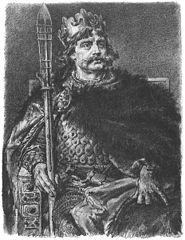
The beginnings of settlement in the Żary area date back to prehistoric times. The name “Zara”, deriving most likely from a small, independent West Slavic tribe, appeared for the first time in 1007 in the chronicles of Thietmar of Merseburg, at the time, when Duke Bolesław I Chrobry of Poland had conquered the Żary land along with the eastern March of Lusatia. Regained by Emperor Conrad II in 1031, the city was chartered on the Magdeburg law by the Wettin margrave Henry III of Meissen about 1260. It covered the following three areas: a trade settlement on the “Salt Trail” running from Leipzig to Wrocław, a fortified town erected among bogs (in the area of the later castle), and a Franciscan settlement established in 1274.
Renaissance
In a twin town (to Zary) called Zagan lived german scientist Jahaness Kepler who alongside with polish astonomer Copernicus and italian physicist Galileo Galilei built the foundations for Laws of Gravity discovered later on by british mathematician Isaac Newton!
Kepler was a mathematics teacher at a seminary school in Graz, where he became an associate of Prince Hans Ulrich von Eggenberg. Later he became an assistant to the astronomer Tycho Brahe in Prague, and eventually the imperial mathematician to Emperor Rudolf II and his two successors Matthias and Ferdinand II. He also taught mathematics in Linz, and was an adviser to General Wallenstein.
Baroque
Georg Philipp Telemann (24 March 1681 – 25 June 1767) was a German Baroque composer and multi-instrumentalist. Almost completely self-taught in music, he became a composer against his family's wishes. After studying in Magdeburg, Zellerfeld, and Hildesheim, Telemann entered the University of Leipzig to study law, but eventually settled on a career in music. He held important positions in Leipzig, Zary, Eisenach, and Frankfurt before settling in Hamburg in 1721, where he became musical director of that city's five main churches. Zary's music school holds his name.
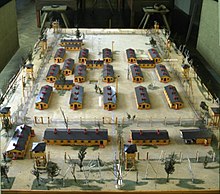 It was
the site of the most courageous escape resulting in the killing of 50 prisoners
including the following Polish flight officers: Major Antoni Kiewnarski; Lieutenant
Stanislaw Krol; and navigation Lieutenants Włodzimierz Kolanowski, Jerzy Mondschein
, Kazimierz Pawluk and Paweł Tobolski.
This episode of history was the subject of
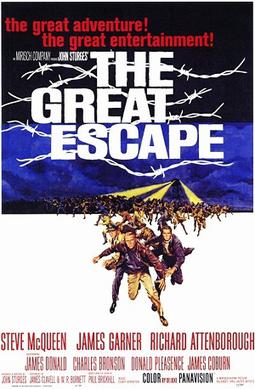
the 1963 film The Great Escape, starring Steve McQueen. It was the biggest and the
most deadly escape of officer aircrew captured by Nazi Germany during the entire
war. The number of prisoners attempting the escape was 200, of whom 76 managed to
leave the camp; 73 were caught and 50 executed on Hitler's orders. Just three
successfully escaped, one to Gibraltar and two to Sweden.[10] All three re-united
in England.
It was
the site of the most courageous escape resulting in the killing of 50 prisoners
including the following Polish flight officers: Major Antoni Kiewnarski; Lieutenant
Stanislaw Krol; and navigation Lieutenants Włodzimierz Kolanowski, Jerzy Mondschein
, Kazimierz Pawluk and Paweł Tobolski.
This episode of history was the subject of
the 1963 film The Great Escape, starring Steve McQueen. It was the biggest and the
most deadly escape of officer aircrew captured by Nazi Germany during the entire
war. The number of prisoners attempting the escape was 200, of whom 76 managed to
leave the camp; 73 were caught and 50 executed on Hitler's orders. Just three
successfully escaped, one to Gibraltar and two to Sweden.[10] All three re-united
in England.
 There were only a few other, similar escapes from German POW camps in the Second
World War. A slightly smaller one on March 6, 1943 from the oflag in Szubin,
involving 43 British officers. On September 19–20, 1943, an escape from the
Oflag VI B in Doessel near Wartburg involved 47 Polish officers. A day later
67 French officers escaped from Edelbach in Austria 67. Another involved 54
French soldiers on December 18, 1943, from Marlag near Hamburg.
There were only a few other, similar escapes from German POW camps in the Second
World War. A slightly smaller one on March 6, 1943 from the oflag in Szubin,
involving 43 British officers. On September 19–20, 1943, an escape from the
Oflag VI B in Doessel near Wartburg involved 47 Polish officers. A day later
67 French officers escaped from Edelbach in Austria 67. Another involved 54
French soldiers on December 18, 1943, from Marlag near Hamburg.